Our 14-year-old son has been going to the gym a few times per week and has asked us if he can start taking Creatine supplements. Here is my review of the evidence…
What is Creatine?
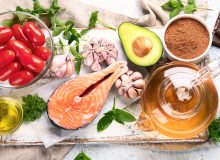
Creatine is a natural compound made from amino acids and produced by the liver, kidneys and pancreas. It is stored in muscles primarily and functions to rapidly generate ATP (adenosine triphosphate) and therefore very important for high intensity short burst physical activity. Food sources include red meat and fish and therefore can be challenging for strict vegetarians. Amino acid rich foods, although not containing much creatine directly, provide the building blocks for natural synthesis. Legumes (lentils, chickpeas, beans), quinoa, whole grains, nuts, seeds and soy products (tempeh, tofu, edamame, soy milk) all bolster amino acid supplies and indirect creatine production.
What is all the hype about?
Creatine is one of the most researched and best evidenced supplements currently available with numerous benefits including improved strength and performance as well as helping build muscle.
Does it work for teens?
Whilst there are hundreds of adult-focussed studies, there are now a growing number of adolescent studies. These focus on adolescent athletes (mainly swimmers and football/soccer players):
- Performance: Improvements in strength, power output, and sport-specific performance (e.g., sprint times, vertical jump) like those seen in adults1.
- Physiology: Increases “intramuscular phosphocreatine” stores; the fuel used for explosive movements lasting 1–10 seconds. In children and adolescents, supplementation has been shown to increase these stores by approximately 13–14%1.
- Muscle Growth: While creatine draws water into muscle cells (increasing size immediately), it also supports actual muscle fibre growth over time when combined with resistance training2.
What are the risks?
The primary hesitation is the “precautionary principle”—the idea that we should not intervene in a developing hormonal system without decades of data. However, the data we do have does not show harm.
- Kidney Health: A common myth is that creatine damages the kidneys. Systematic reviews of adolescent studies have found no negative impact on markers of kidney function (renal stress) or liver enzymes in healthy teens taking standard doses2.
- Growth & Puberty: There is no current evidence that creatine negatively affects growth plates or hormonal balance (testosterone/oestrogen) during puberty2.
- Side Effects: The most consistently reported side effect is weight gain (typically 1–2 kg of water retention in the muscles). Rarer side effects include stomach discomfort or muscle cramping, usually caused by dehydration or taking too large a dose at once3.
The “Hidden” Risk: Contamination:
For a parent, this is arguably the most significant risk.
- Prevalence: Research indicates that 14% to 50% of sports supplements may be contaminated with banned substances (e.g., anabolic steroids, stimulants) or heavy metals not listed on the label3. It’s worth considering that this is American data and there is no comparable UK information where regulations are stricter.
Emerging Bonus Effects: Neuroprotection
A growing area of interest is the potential for creatine to protect the adolescent brain, which is particularly relevant for contact sports (rugby, football, hockey, martial arts).
- Concussion Recovery: Emerging evidence suggests that creatine may help mitigate the effects of mild traumatic brain injury. The brain demands high energy to heal after trauma, and creatine supplementation may support cerebral energy metabolism during this critical window4.
- Prevention: Some researchers propose “pre-loading” creatine in contact-sport athletes to provide a neuroprotective buffer, though further research is required5.
What do the experts say?
The International Society of Sports Nutrition (ISSN) lists specific criteria for when creatine is acceptable for a teenager6:
- The athlete is involved in serious/competitive supervised training.
- The athlete is consuming a well-balanced, performance-enhancing diet.
- The athlete and parents understand the truth about effects vs. side effects.
- The use is supervised by parents, coaches, or trainers.
In the UK, there is no formal UK guideline either endorsing or opposing creatine use in teens. Creatine monohydrate is legally available with no age-based sales restrictions (like protein powders) and it is therefore essential that young people can openly discuss the risks and benefits with trusted adults to make an informed choice.
Recommended Approach:
- Whole food first approach – prioritise optimising dietary intake as first-line with sufficient creatinine (or amino-acid) rich foods.
- Maintain good general health – if any underlying chronic medical conditions, additional caution required when considering supplementation.
- Hydration – ensuring adequate hydration is essential for general health and wellbeing but even more so if considering supplementation due to the mechanism of action.
- Structured regular physical activity – creatine benefits don’t replace good technique, nutrition and recovery.
- Optimise other lifestyle pillars as much as possible first – it may be that small improvements collectively in sleep, diet, physical activity, relationships and mental wellbeing augments performance without the need for supplementation.
- Open discussions – maintaining trusting relationships where all options are discussed allows informed and supported decision making as well as avoiding acquiring supplements via alternate channels. Peer pressure, potential body dysmorphia and other factors may also become apparent.
If, following optimisation via the recommended approach and open discussion, the ultimate decision is for Creatine supplementation:
- Reliable Sources: Creatine monohydrate is the most studied form. Look for transparent labelling with only Creatine as the single ingredient (avoiding ultra-processed additional ingredients). Products should be tested by independent organisations such as NSF Certified for Sport or Informed Sport/Informed Choice (logos below)
- Dosage: 3 grams per day. Studies have shown there are no harms from taking 30g per day for 5 years in adults but sticking to the lower dose would be recommended3. Loading with higher doses for the initial period is not necessary and increases the risk of abdominal pain/bloating.
- Hydration: Essential to prevent cramping.
- Cycle: While not strictly medically necessary, many experts suggest teens “cycle” off the supplement to ensure they do not become psychologically dependent on it for performance. This could be during the football season or during school term but useful to have that built-in break.
References
- Jagim, A. R., Kerksick, C. M., & Kreider, R. B. (2021). Creatine Supplementation in Children and Adolescents. Nutrients, 13(2), 664.
- Jagim, A. R., Stecker, R. A., Harty, P. S., Erickson, J. L., & Kerksick, C. M. (2018). Safety of Creatine Supplementation in Active Adolescents and Youth: A Brief Review. Frontiers in Nutrition, 5.
- Jagim, A. R., Harty, P. S., Erickson, J. L., Tinsley, G. M., Garner, D., & Galpin, A. J. (2023). Prevalence of adulteration in dietary supplements and recommendations for safe supplement practices in sport. Frontiers in Sports and Active Living, 5.
- Forbes, S. C., Cordingley, D. M., Cornish, S. M., Gualano, B., Roschel, H., Ostojic, S. M., Rawson, E. S., Roy, B. D., Prokopidis, K., Giannos, P., & Candow, D. G. (2022). Effects of Creatine Supplementation on Brain Function and Health. Nutrients, 14(5), 921.
- Conti, F., McCue, J. J., DiTuro, P., Galpin, A. J., & Wood, T. R. (2024). Mitigating Traumatic Brain Injury: A Narrative Review of Supplementation and Dietary Protocols. Nutrients, 16(15), 2430.
- Kreider, R. B., Kalman, D. S., Antonio, J., Ziegenfuss, T. N., Wildman, R., Collins, R., Candow, D. G., Kleiner, S. M., Almada, A. L., & Lopez, H. L. (2017). International Society of Sports Nutrition position stand: safety and efficacy of creatine supplementation in exercise, sport, and medicine. Journal of the International Society of Sports Nutrition, 14(1).
 Login
Login